
Melanie Smokey (Western Shoshone/Washoe) and her family know it is time to prepare for picking pine cones when the bright yellow rabbit brush blooms in late summer. They will have about a month to get ready to gather the cones’ piñon nuts near her Yomba Reservation, the home of the Western Shoshone people in central Nevada.
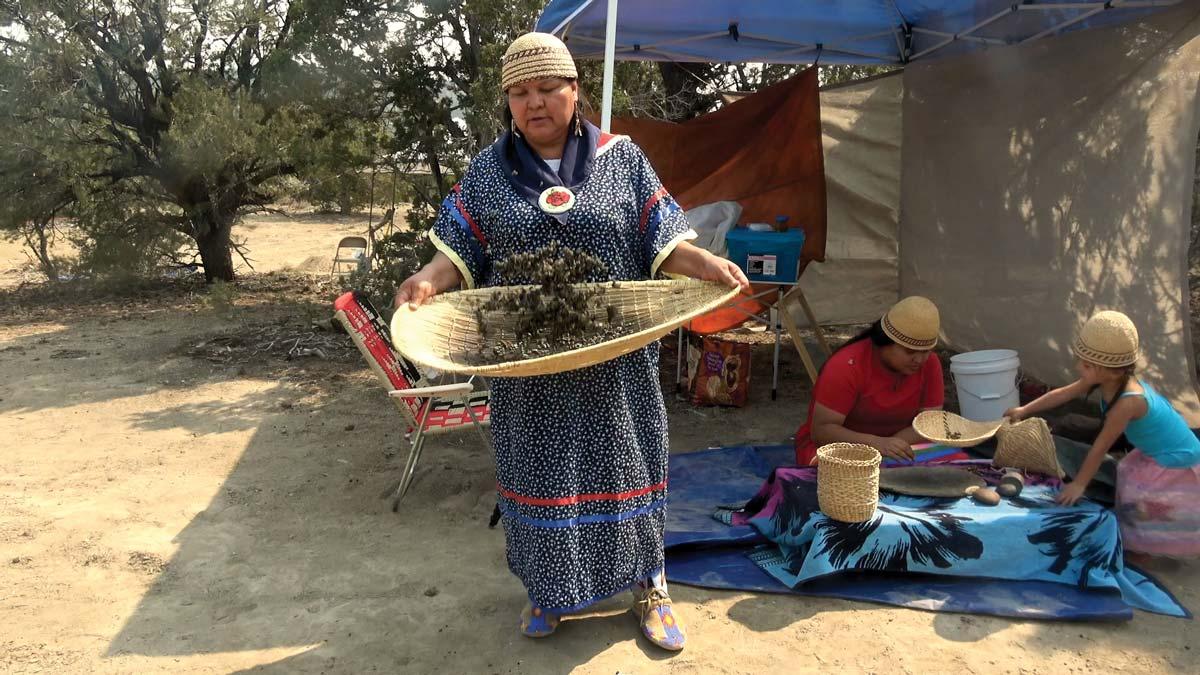
Melanie Smokey tosses piñon nuts removed from their pine cones with hot coals in a willow basket to toast them. She then teaches her niece how to crack open the nuts’ shells with a stone.
Courtesy of the Native Memory Project
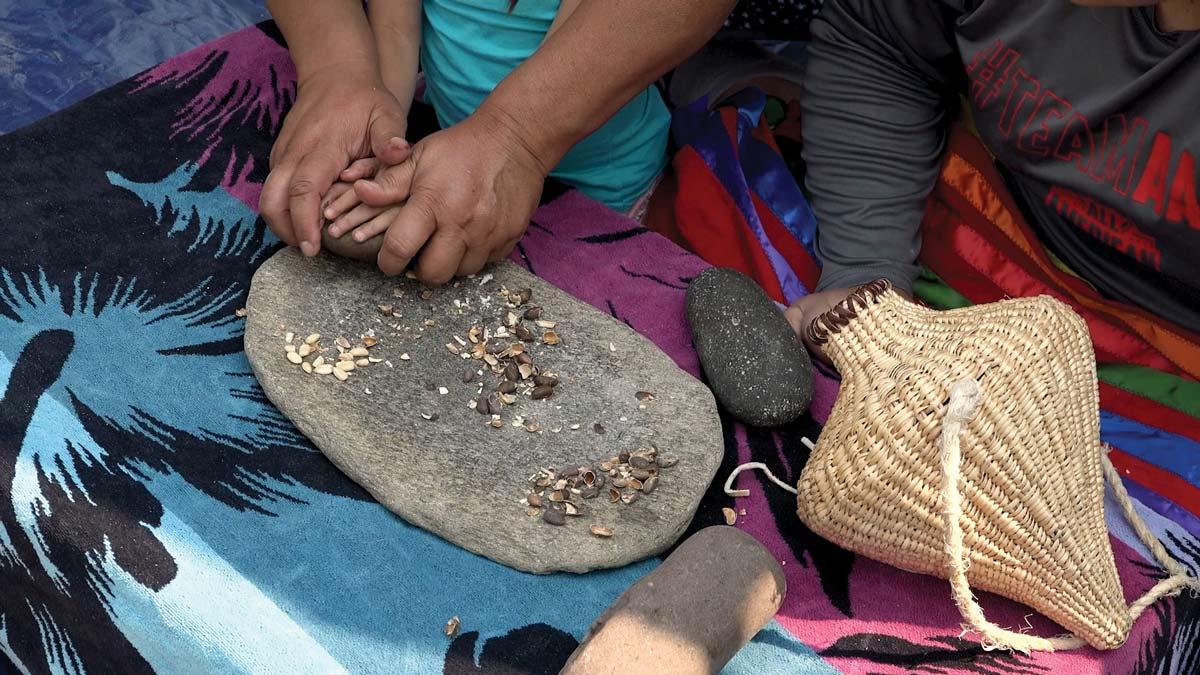
Melanie Smokey tosses piñon nuts removed from their pine cones with hot coals in a willow basket to toast them. She then teaches her niece how to crack open the nuts’ shells with a stone.
Courtesy of the Native Memory Project
Piñon nuts (also known as pinyon nuts and called “duvuh” in the Shoshoni language) that are large enough to harvest are found in five of the 20 species of pine trees that grow in Mexico and across the Rocky Mountain West region. They long have been a dietary staple of western tribes.
Smokey’s harvest begins with a blessing song accompanied by drumming and dancing. “There are more than 20 different songs for our pine nuts,” she said. “We show gratitude through our songs. We are told if we don’t harvest plants such as these nuts, they will go away.”
The gathering, processing and cooking of pine nuts is labor-intensive. It first requires removing underbrush and dead tree limbs. This reduces the spread of wildfires and provides tribal members with firewood while they camp during harvest. “We are never doing just one thing,” Smokey said.
They use long birch poles to hit the branches and cause the sticky closed pinecones to fall. These are then steamed underground to remove the pitch and free the tender nuts inside. Open cones are cracked with sticks to release their nuts, which are then cooked by tossing in an open-weave basket with hot coals. “You have to move in a circular motion to keep the coals on top so you don’t burn your basket,” explained Smokey. While doing so, Smokey said, “we call the wind to help with the winnowing process.”
Smokey has used her mother’s cooking basket often during the past 20 years. Baskets and hats are woven from willow and the red bud plant, with cordage handles made from milkweed. Woven “work hats” protect heads from branches and also serve as baskets for gathering berries and other plants.
Known as “winter fat nuts,” pine nuts are full of protein and carbohydrates that can help sustain tribal members through lean, cold times. But gathering them serves another purpose, Smokey said: “This is also how we stay connected to the land that feeds us. The land knows we are still here and that we value the land.”