
Issues Background
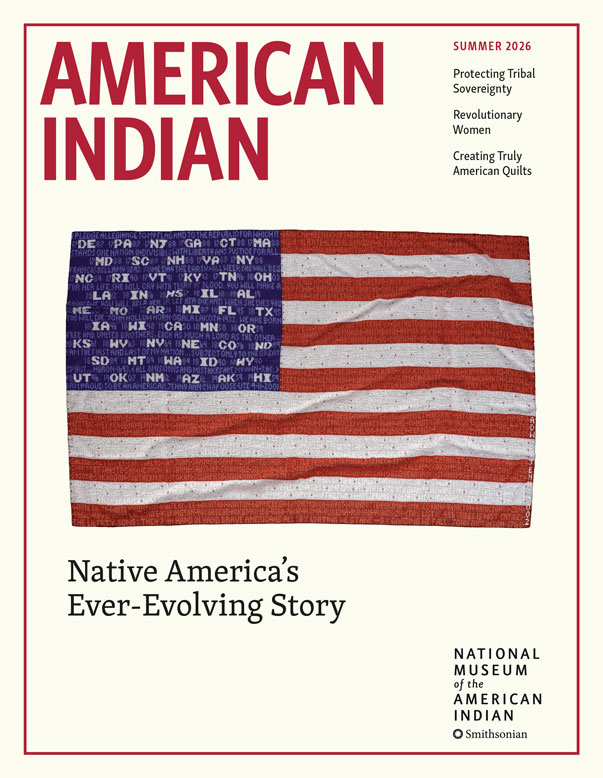
On the Cover
On this U.S. flag are more than 130,000 seed beads used to form state abbreviations (red dots indicate the original 13 colonies) symbolizing stars, the words of the Pledge of Allegiance in opaque blue and the names of 456 tribal nations in the red and white stripes.
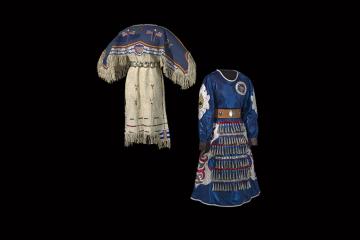
Behind the cover is a detail of a Lakota dress created with hide, glass beads and sinew circa 1900–1910 that is in the NMAI collection. 2/5800
Articles
Perspective
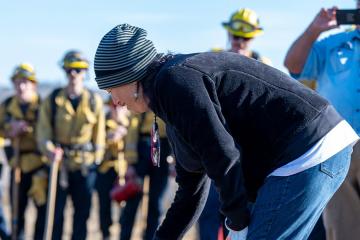
Tribal sovereignty is an inherent right. Yet many Native nations struggle to protect it.
History Retold
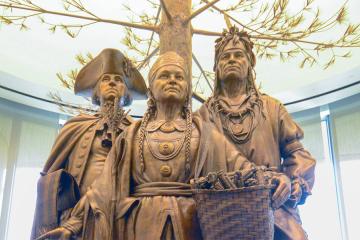
Indigenous women were central to strategy, diplomacy and their people’s survival during the American Revolution, yet their stories have been often overlooked.
History Retold
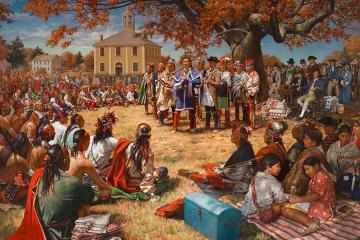
The creation of the United States is often thought of as the outcome of a dispute between England and its colonies, but Native peoples were also integral to this story.
History Retold
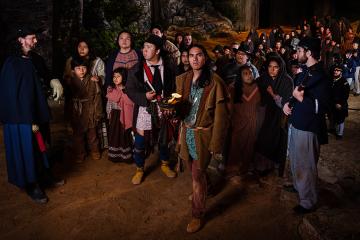
Indigenous peoples have rebuilt their nations and cultures after some of the most devastating conflicts fought on their homelands.
Arts and Cultures
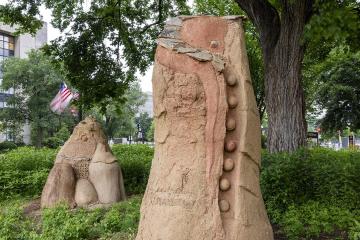
Nora Naranjo Morse’s unique vision gives art a life of its own. Her family of clay sculptures in the National Museum of the American Indian’s landscape evoke the homes and vessels of her Kha’p’o Owingeh (Santa Clara Pueblo) people and are ever evolving, resculpted by nature.
Collection Stories
Two dresses created a century apart showcase powerful symbols of the United States and those who have served this country.
Insights
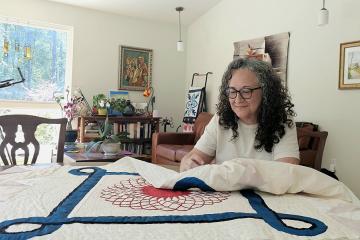
Learn how quilts are icons of American cultures and beautiful works of art and how you can join NMAI's Quilt Along.